Tight shoulders. A neck that stiffens by mid-afternoon. An ache across the upper back that arrives with the working week and never quite leaves.
It is the most common complaint clients bring to Sabaidee, and it is the reason this treatment exists.
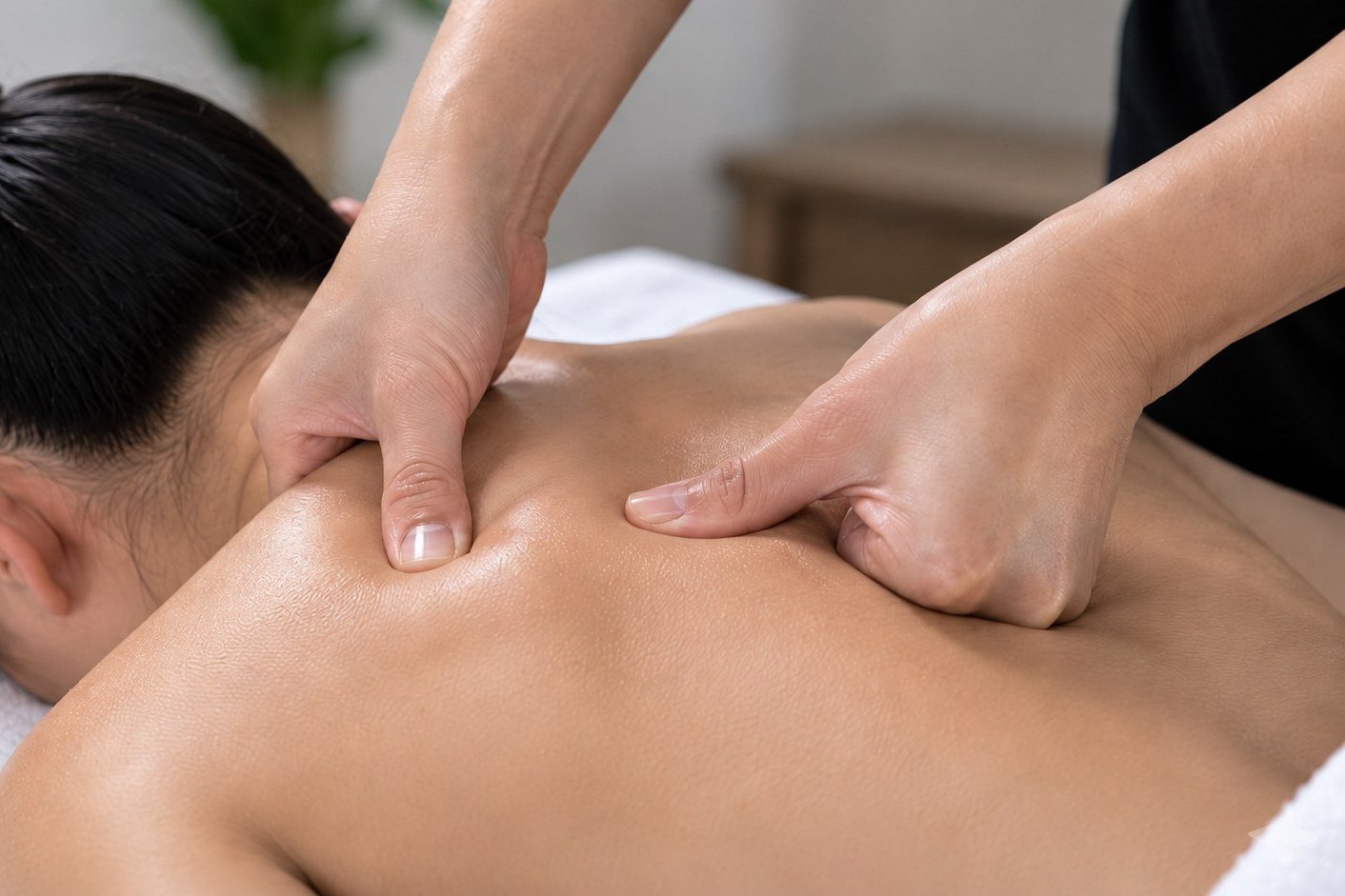
Back, Neck & Shoulder Massage is focused work on the upper body – the neck, the shoulders and the back that supports them both. Every appointment is provided personally by Pailin and shaped around where your tension actually sits.
Back, Neck & Shoulder Massage At A Glance
Quick Answer
Back, Neck & Shoulder Massage is focused treatment for upper-body tension – the neck, shoulders and upper back. It suits people who spend long hours at a desk, driving or carrying stress in their shoulders, and it includes the back because neck tightness rarely begins in the neck alone. Appointments are 30 or 60 minutes with Pailin.
Is Back, Neck & Shoulder Massage Right For You?
Which Massage Best Fits What You Need?
|
If your main priority is… |
A good place to start |
|---|---|
|
Focused work on the neck, shoulders and upper back |
Back, Neck & Shoulder Massage |
|
Whole-body stretching, movement and mobility |
|
|
Firm, focused work on persistent muscular tightness anywhere |
|
|
Recovery and mobility after sport or training |
|
|
Warmth and deep relaxation |
|
|
Tired feet and lower legs |
If you are unsure, tell Pailin how you feel and what you want from the appointment, and she will help you choose.
Why It Includes The Back
One of the biggest misconceptions is that neck discomfort begins in the neck.
In reality, the muscles across the shoulders and upper back – and often the chest – all influence how comfortably the neck moves. When one area tightens, the others compensate, and the place that hurts is frequently not the place doing the work.
That is why this treatment covers the back as well as the neck and shoulders. Pailin considers how the whole upper body is working together rather than concentrating on one painful spot, and clients consistently find that a more satisfying treatment.
Why Neck And Shoulder Tension Develops
Why stronger is not always better
Many people assume the answer is firmer pressure.
The muscles around the neck can be particularly sensitive, and applying too much force too quickly can encourage them to tighten further. Working gradually, and giving muscles time to soften, usually achieves more while feeling considerably better.
One thing Pailin often hears afterwards is: “I expected a really hard massage, but that felt much better than I imagined.”
Who Is It Best For?
Desk and hybrid workers
Long hours at a screen, often at a kitchen table rather than a proper desk. Clients working around Edinburgh city centre, Fountainbridge and Haymarket book this more than any other treatment.
Healthcare workers
Repetitive lifting, reaching and leaning across long shifts places sustained demand on the shoulders and upper back.
Students
Long study sessions, poor chairs and a laptop at the wrong height. Edinburgh has a great many students and this is very often what brings them in.
Drivers and commuters
Extended periods in a fixed position, with the arms forward and the shoulders slightly raised, is one of the most reliable ways to accumulate upper-body tension.
Anyone who carries stress in their shoulders
You may recognise this without needing it explained. For many people the shoulders are where a difficult week actually lands.
Your Appointment
The consultation
Every appointment begins with a short conversation. Pailin will ask where the tension sits, how long you have noticed it, what your working day looks like, any previous injuries, and how firm you like the pressure.
Clients often arrive certain the problem is in one place. It frequently becomes clear during the consultation that something nearby is placing extra demand on it.

During your massage
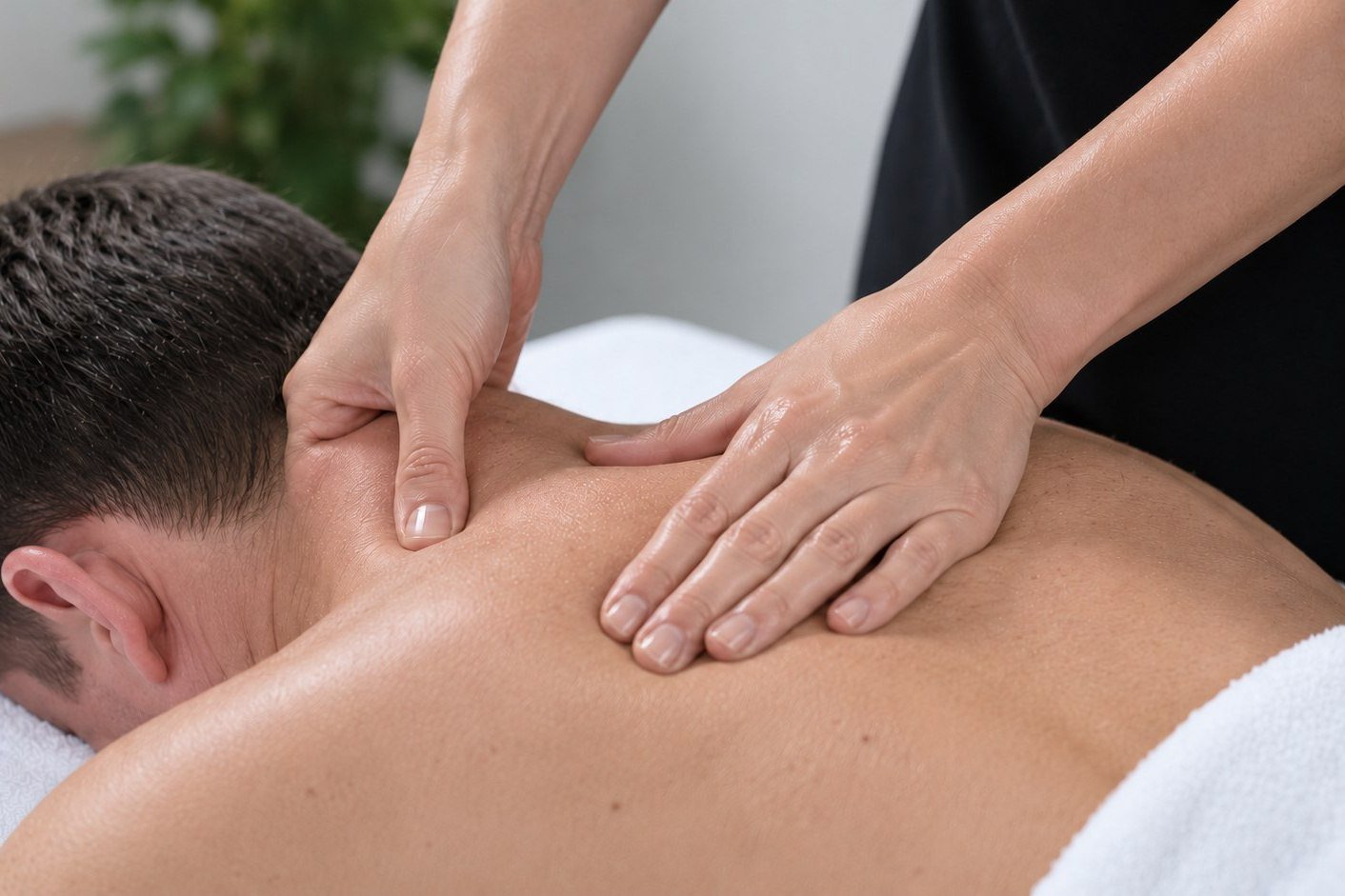
Treatment focuses on the neck, shoulders and upper back, and may extend across the mid-back or into the upper arms where those muscles are contributing.
Pailin works gradually rather than forcefully, allowing muscles time to respond before increasing pressure where it helps.
You remain in control throughout. If the pressure feels too firm or too gentle, if an area is particularly sensitive, or if you would like a different area worked on or a short break, simply say so.
What Does It Feel Like?
Most people describe it as focused, steady and more comfortable than expected.
You may notice tight areas feeling tender at first and then softening, the shoulders sitting lower, and the neck turning more freely by the end of the appointment.
A common reaction is realising quite how much tension had become normal.
What Back, Neck & Shoulder Massage Can Support
Everyone responds differently, so Pailin does not promise a particular result. Clients commonly choose this treatment to support:
Massage works best alongside movement, breaks from the screen and a sensibly set-up desk – not instead of them.
After Your Massage
Many clients find it helps to drink plenty of water, keep moving gently through the day, and take a moment before going straight back to a screen.
Some people feel an immediate difference. Others notice it more the following morning. A little tenderness across the shoulders for a day is normal.
Prices
30 minutes – £40
60 minutes – £55
Thirty minutes concentrates on the neck and shoulders and suits a focused session between commitments. Sixty minutes allows proper time across the back as well, which is what most clients choose.
Back, Neck & Shoulder Massage is not offered as a 90 or 120-minute appointment.
Frequently Asked Questions
We’d Love to Welcome You to Sabaidee
Most people first book because their shoulders have been tight for weeks. They return because it is easier to manage tension before it becomes the thing you notice all day.
If you spend your working life at a screen, in a car, or carrying more than your share, this is the treatment that addresses it directly.
Sabaidee is in Lochrin Buildings on Gilmore Place in Tollcross, a short walk from the King’s Theatre, within easy reach of Haymarket and the west end.
Have a question first?