Traditional Thai Massage is the treatment Pailin grew up with, and the one she trained in at home in Thailand.
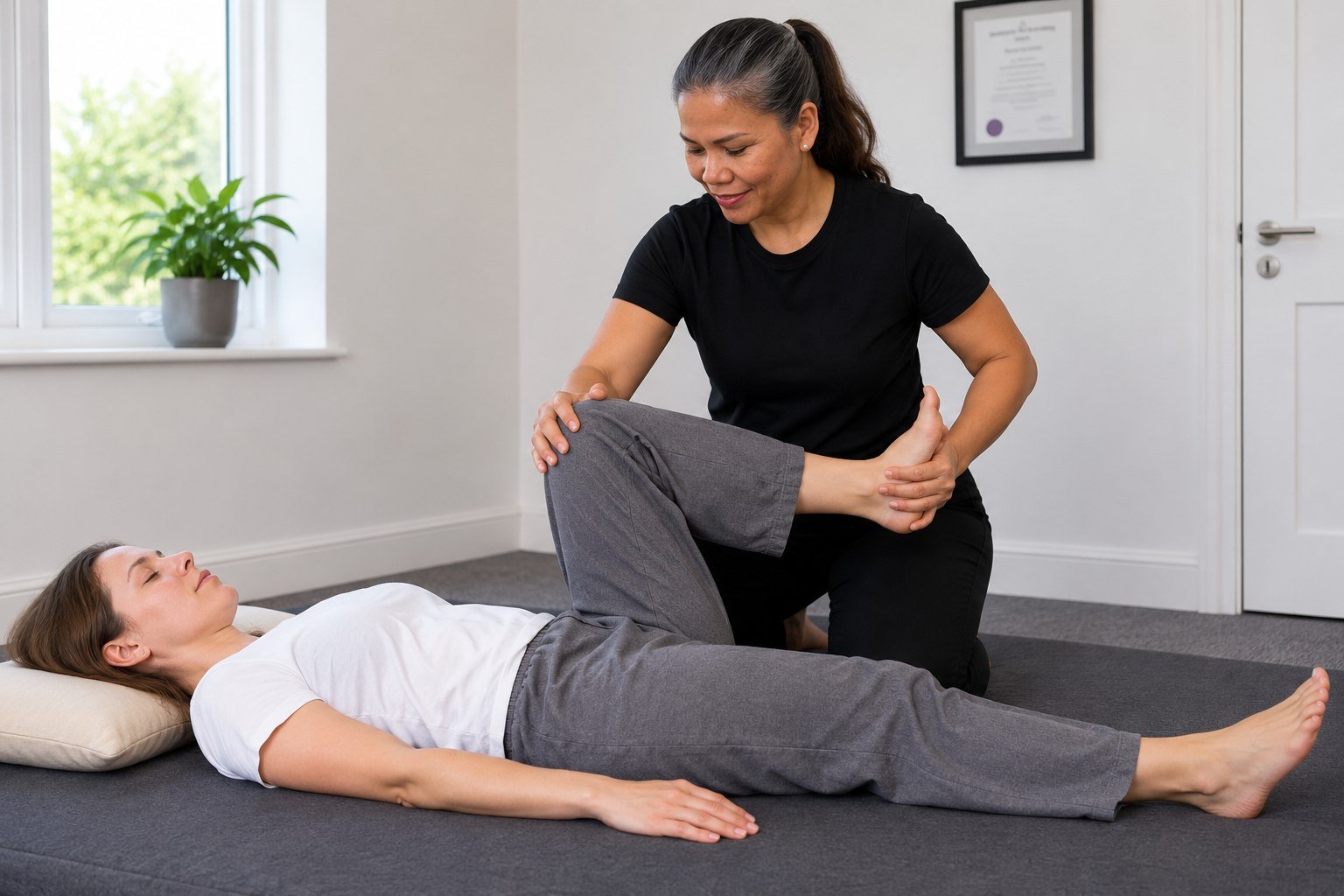
It is performed clothed and without oil, combining firm pressure with movement and assisted stretching. Rather than working oil into one muscle, Pailin moves through the body, using her hands, forearms, elbows and feet, and supports you through stretches you could not reach on your own.
It is the most complete treatment on the menu, and the one most people mean when they say they want a Thai massage.
Traditional Thai Massage At A Glance
Quick Answer
Traditional Thai Massage is a whole-body treatment performed clothed and without oil, combining firm pressure with movement and assisted stretching. Pailin moves you through supported stretches rather than working oil into individual muscles. It suits general stiffness, mobility and anyone who wants an authentic Thai treatment. Appointments are 30, 60, 90 or 120 minutes.
Is Traditional Thai Massage Right For You?
Which Massage Best Fits What You Need?
|
If your main priority is… |
A good place to start |
|---|---|
|
Whole-body stretching, movement and mobility |
Traditional Thai Massage |
|
Firm, focused work on one or two tight areas |
|
|
Recovery and mobility after sport or training |
|
|
Focused upper-body massage |
|
|
Warmth and deep relaxation |
|
|
Tired feet and lower legs |
If you are unsure, tell Pailin how you feel and what you want from the appointment, and she will help you choose.
What Makes It Different
Pressure, movement and stretching together
Rather than working across one area at a time, Traditional Thai Massage moves through the body, treating it as something that works as a whole. A tight hip affects how the lower back behaves. Restricted shoulders change how the neck moves.
Pailin uses hands, forearms, elbows and sometimes feet to apply pressure, then supports you through stretches that open up the movement that pressure alone cannot reach.
Why Assisted Stretching Matters
You may hear Thai massage described as “passive yoga”. It is a reasonable shorthand: the positions have something in common with yoga, but you are not holding them yourself.
When you stretch alone, you have to create the position, control it, and often hold it with the very muscles you are trying to release.
With assisted stretching, Pailin does that work for you. She supports and moves your body while you stay relaxed, which allows positions and angles that are difficult to reach unaided – particularly around the hips, hamstrings, shoulders and back.
You do not need to be flexible. Every stretch is adjusted to the range that is comfortable for you on the day, and nothing should ever feel forced.
Who Is It Best For?
People who feel stiff rather than sore
If the problem is general stiffness rather than one stubborn knot, this is usually the better choice than Deep Tissue.
Desk workers
Long hours sitting shortens the hips and rounds the shoulders. Clients around Edinburgh city centre, Fountainbridge and Haymarket book this to counteract a working week spent in one position.
Active people
Golfers, walkers, runners and gym users who want mobility rather than intensive muscle work. Pailin also offers Sports Massage if recovery after training is the main aim.
Anyone returning to massage after a long gap
Because it is clothed, unhurried and adapted throughout, it is often the least daunting treatment to come back to.
People who want the real thing
Many clients have had “Thai massage” elsewhere that turned out to be an oil massage in a Thai-decorated room. This is the treatment Pailin trained in, done the way it is done in Thailand.
Your Appointment
The consultation
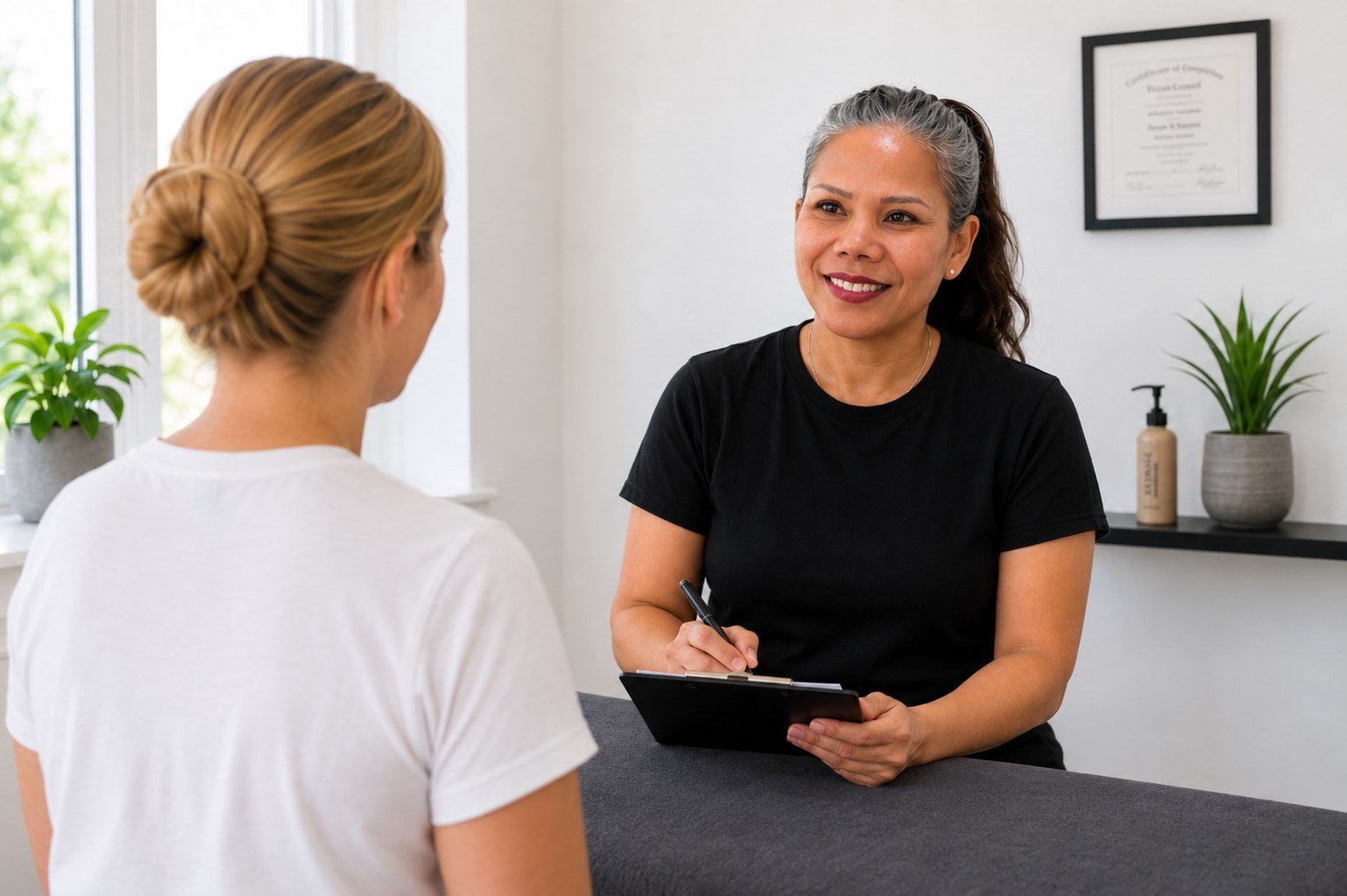
Every appointment begins with a conversation. Pailin will ask how you have been feeling, where you would like her to focus, what you do day to day, about any injuries, and how firm you like the pressure.
During your massage
You stay clothed throughout. Treatment typically works through the legs, hips, back, shoulders, arms and neck, combining pressure with movement and assisted stretching.
The pace is unhurried. Pailin will move you through positions rather than asking you to hold them yourself, and she adjusts as she goes based on what she finds.
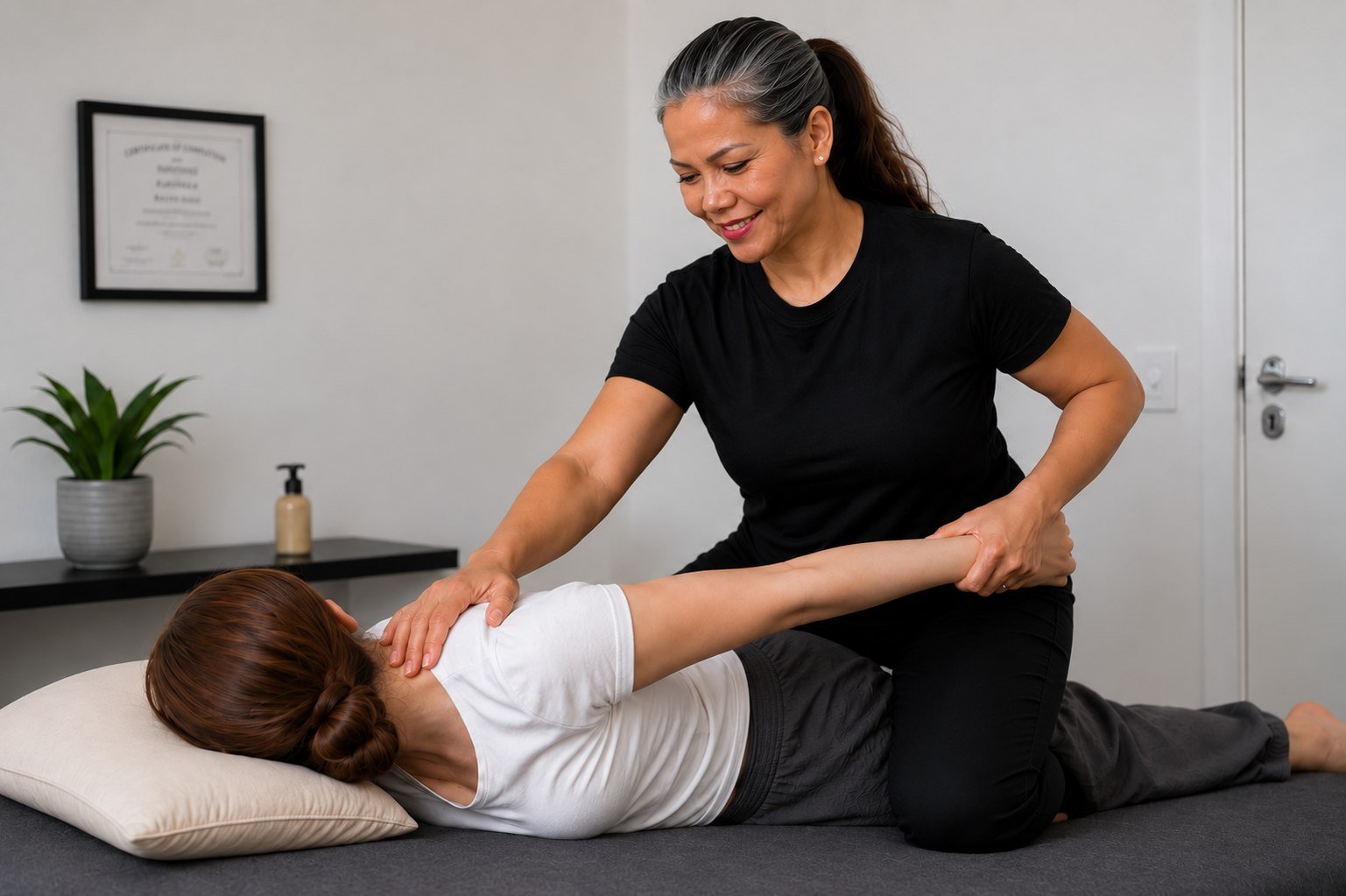
You remain in control throughout. If a stretch feels like enough, or a pressure is too firm, say so. You can also ask for more, for a different area, or for a short break.
What Does It Feel Like?
Most people describe it as firm, purposeful and more active than they expected. You are moved, supported and stretched rather than lying still throughout.
Some positions feel unusual the first time. Some tight areas feel tender and then release. Most clients notice they are moving more freely by the end of the appointment than at the start.
If you have only ever had an oil massage, it will feel genuinely different. Most people find that a pleasant surprise.
Traditional Thai Massage isn’t the quietest treatment on the menu, and some people wonder whether something this active can really relax them. Most find that it does. Steady pressure, repeated movement and stretching have their own rhythm, and relaxation doesn’t have to mean lying completely still – for a lot of clients, handing the work over and stopping thinking about what their body needs to do is exactly what allows them to switch off.
If lying still and warm is what you’re after, Hot Stone Massage or Thai Foot Massage will suit you better, and Pailin will happily say so.
What Traditional Thai Massage Can Support
Everyone responds differently, so Pailin does not promise a particular result. Clients commonly choose this treatment to support:
Massage works best alongside regular movement and rest, not instead of them.
After Your Massage
Many clients find it helps to drink plenty of water, keep moving gently through the day, and avoid anything unusually strenuous immediately afterwards.
Some people feel looser straight away. Others notice it more the following morning. A little tenderness in stretched areas is normal.
Prices
30 minutes – £40
60 minutes – £55
90 minutes – £80
120 minutes – £100
Sixty minutes is the most popular choice and the usual recommendation for a first visit. Ninety or 120 minutes allows a genuinely unhurried whole-body treatment, which is where Traditional Thai Massage is at its best.
Thirty minutes suits a focused session on one area between commitments.
Frequently Asked Questions
We’d Love to Welcome You to Sabaidee
This is the treatment Pailin grew up with in Nakhon Ratchasima, where Thai massage was a practical part of daily life rather than an occasional treat. It is the one she trained in, and the one she has been giving in Edinburgh since 2013.
If you want to know what Thai massage actually is, this is it.
Sabaidee is in Lochrin Buildings on Gilmore Place in Tollcross, a short walk from the King’s Theatre, within easy reach of Haymarket and the west end.
Have a question first?