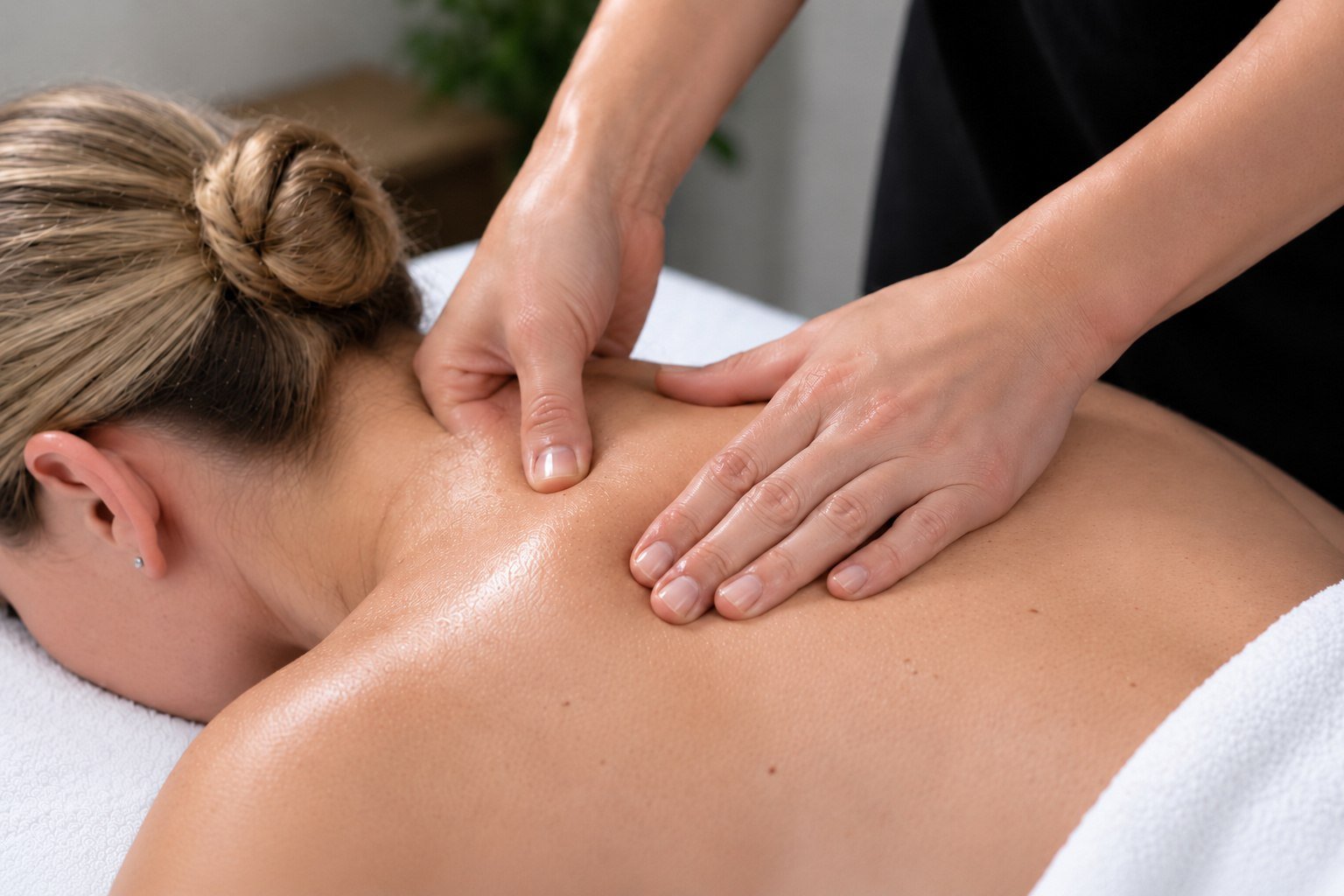
Persistent muscular tightness can gradually become part of everyday life. A shoulder that always feels tight. A knot in your back that never completely disappears. A hip that feels restricted every morning.
Many people simply learn to live with it.
Deep Tissue Massage takes a different approach. Rather than treating your whole body equally, it focuses on the muscles that need the greatest attention, using slower and more targeted techniques designed to encourage lasting comfort rather than temporary relief.
Every Deep Tissue Massage at Sabaidee is provided personally by Pailin, an experienced Thai therapist who believes successful treatment is built on understanding the body – not simply applying more pressure.
Deep Tissue Massage At A Glance
Quick Answer
Deep Tissue Massage is a targeted treatment using slower, more focused techniques to reduce persistent muscular tightness and improve comfort in specific areas of the body. It suits people with one or two stubborn areas rather than general stiffness, and every appointment with Pailin is adapted to how your muscles respond on the day.
Is Deep Tissue Massage Right For You?
Which Massage Best Fits What You Need?
|
If your main priority is… |
A good place to start |
|---|---|
|
Persistent muscular tightness in one or two areas |
Deep Tissue Massage |
|
Whole-body stretching, movement and mobility |
|
|
Recovery and mobility after sport or training |
|
|
Focused upper-body massage |
|
|
Warmth and deep relaxation |
|
|
Tired feet and lower legs |
Choosing the right treatment usually matters more than choosing the strongest one. If you are unsure, tell Pailin how you feel and what you want from the appointment, and she will help you choose.
What Makes Deep Tissue Massage Different?
One of the biggest misconceptions is that Deep Tissue Massage simply means the therapist presses harder.
Good Deep Tissue Massage is not about maximum force. It is about the right pressure, in the right place, at the right time.
It also uses oil, which is what makes that possible. Oil lets Pailin work slowly and continuously into a single muscle without her hands catching on the skin. Traditional Thai Massage works the other way – without oil, through clothing, using pressure and movement instead. Neither is better; they are built for different jobs.
Rather than working quickly across the whole body, Pailin spends time understanding how your muscles respond before gradually introducing slower, more focused techniques where they are genuinely needed. Many first-time clients are surprised by how effective controlled pressure feels compared with forceful massage.
Why Do Muscles Become Tight?
Why Slower Often Works Better
Many people assume deeper pressure automatically produces better results. In reality, muscles often respond differently.
If pressure is introduced too quickly, muscles may tighten to protect themselves. Working more slowly, and allowing tissue time to relax, often makes it possible to achieve more while creating considerably less discomfort.
One thing Pailin frequently notices is that clients expecting an extremely painful massage are surprised that slower techniques achieve far more while feeling much more comfortable.
Who Is It Best For?
Office professionals
Long hours at a computer around Edinburgh city centre, Fountainbridge and Haymarket commonly contribute to recurring shoulder, neck and upper back tightness.
Tradespeople
Electricians, plumbers, joiners and decorators repeat the same physical movements every day, often creating recurring tension in predictable areas.
Healthcare professionals
Nurses and carers perform repetitive lifting, reaching and standing across long shifts. Many choose Deep Tissue Massage to focus on the areas working hardest.
Active adults
Gym-goers, golfers, runners, cyclists and rugby players often carry persistent tightness in particular muscle groups. Whether you are preparing for the Edinburgh Marathon Festival or playing weekend golf, focused treatment helps many people feel more comfortable between sessions.
Anyone living with a persistent knot
One thing Pailin hears repeatedly is it’s always the same spot. Many clients do not feel stiff everywhere – they simply have one area that never fully relaxes. Deep Tissue Massage is often the most appropriate treatment for exactly that.
Your Appointment
The consultation
Every appointment begins with a relaxed conversation. This helps Pailin understand not only where you feel discomfort, but why those muscles may have become overloaded.
You might discuss the areas causing the greatest discomfort, how long you have noticed it, your occupation and hobbies, previous injuries, your preferred pressure, and any medical conditions that may affect treatment.
Clients sometimes arrive convinced one muscle is responsible. During the consultation it often becomes clear that another area is placing extra demand on it.

During your massage
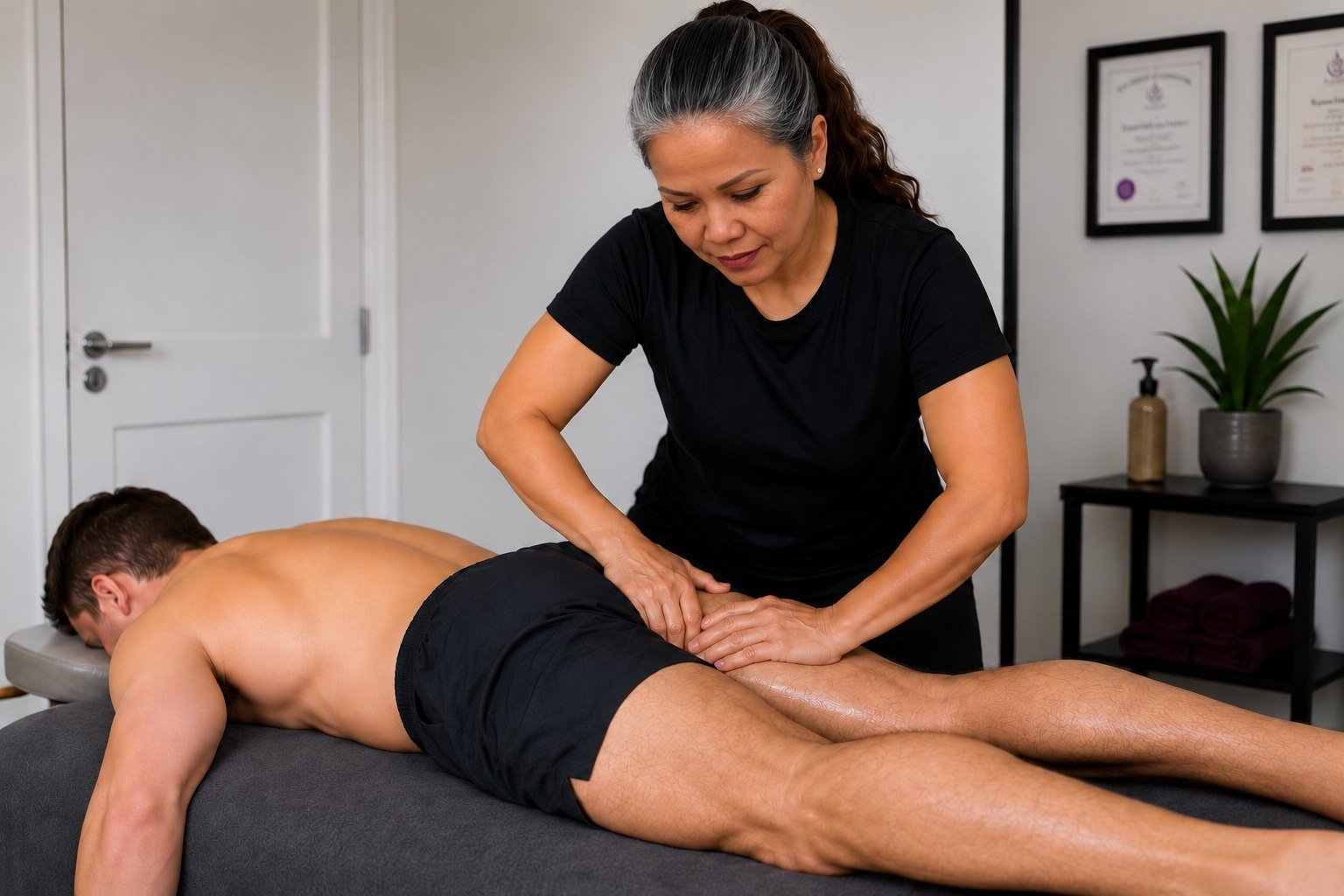
Deep Tissue Massage focuses on quality rather than quantity. Instead of working every muscle equally, Pailin concentrates on those contributing most to your discomfort – which may mean the neck, shoulders, upper or lower back, hips, glutes, calves, thighs or forearms.
Some appointments concentrate almost entirely on one stubborn area. Others involve several muscles working together.
People are sometimes surprised that the whole body is not covered. That is intentional. Spending additional time where it is genuinely needed usually provides more value than briefly treating muscles that are not contributing to the problem.
Working with your body, not against it
Deep Tissue Massage should never feel like a test of endurance. Many people have been told no pain, no gain, but excessively forceful treatment can encourage muscles to tighten further.
Your feedback matters throughout. If pressure feels too firm, too gentle, particularly sensitive, or simply different from what you expected, say so. You can also ask at any time for a different area to be worked on, or for a short break. Small adjustments often make a significant difference to both comfort and effectiveness.
What Does It Feel Like?
Most clients describe it as focused, controlled, purposeful, slower than expected and surprisingly comfortable.
You may notice gradual pressure, muscles softening over time, temporary tenderness in particularly tight areas, and easier movement as the treatment progresses.
Many people are surprised that it feels far less aggressive than they imagined.
What Deep Tissue Massage Can Support
Everyone responds differently, so Pailin does not promise a particular result. Clients commonly choose this treatment to support:
Massage works best alongside sensible training, movement, rest and recovery – not instead of them.
After Your Massage
Your body may continue responding after you leave. Many clients find it helps to drink plenty of water, keep moving gently through the day, avoid unusually strenuous exercise immediately afterwards, and pay attention to how they feel over the next day or two.
Some people feel an immediate improvement. Others notice gradual changes over the following 24 to 48 hours. Both are perfectly normal.
Prices
Choose the appointment length that gives Pailin enough time to work with the areas you want to focus on:
30 minutes – £40
60 minutes – £55
90 minutes – £80
120 minutes – £100
Sixty minutes suits persistent tightness in one or two specific areas. Ninety minutes is better if several areas need attention or you would like a more comprehensive treatment.
If you are unsure which duration will suit you, ask Pailin when you get in touch.
Frequently Asked Questions
We’d Love to Welcome You to Sabaidee
Many people first visit because one area of their body has become persistently tight. They return because everyday life feels easier when that tension is managed before it becomes overwhelming.
One thing Pailin hears regularly is: “I thought I needed a harder massage. What I actually needed was a smarter one.”
Sabaidee is in Lochrin Buildings on Gilmore Place in Tollcross, a short walk from the King’s Theatre, within easy reach of Haymarket and the west end.
Have a question first?